
Just A Taste...

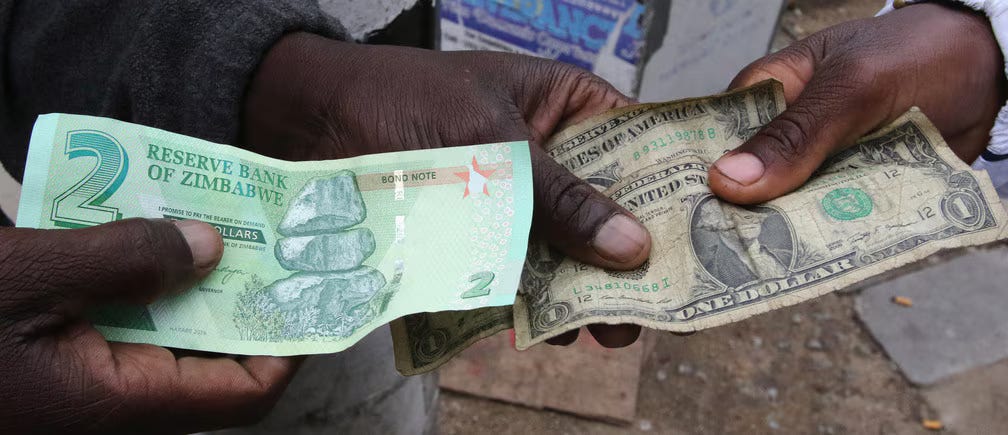
When I was a young’un, the church my family attended would hold an annual festival, where we’d (of course) engorge ourselves on all things Greek. Part of that festival was a Monte Carlo night, where various forms of gambling - sanctioned as fundraisers for the church - would take place. These being simpler times, I as a kid could put a dollar on a form of roulette wheel or something similar. My father would, as the more sober adults do, play poker.
The church would take a percentage of every pot.
To my young but already mathematically-inclined mind, I realized that made it a loser’s game, and that’s before I came to understand that all casino games have a house edge. I could understand a poker game, where some would win and some would lose, but bleeding out some of every pot meant that coming away in the black would be a very tall order for anyone who played any length of time.
Of course, no one forced the players to sit at the table, just as no one forces anyone to visit any casino anywhere. And, since it was a fundraiser for the church, the players could make the argument that they were contributing in exchange for some entertainment. Their money, their choice.
However, that notion of bleeding out a bit of every pot is truly insidious when you consider it in a broader, non-voluntary context.
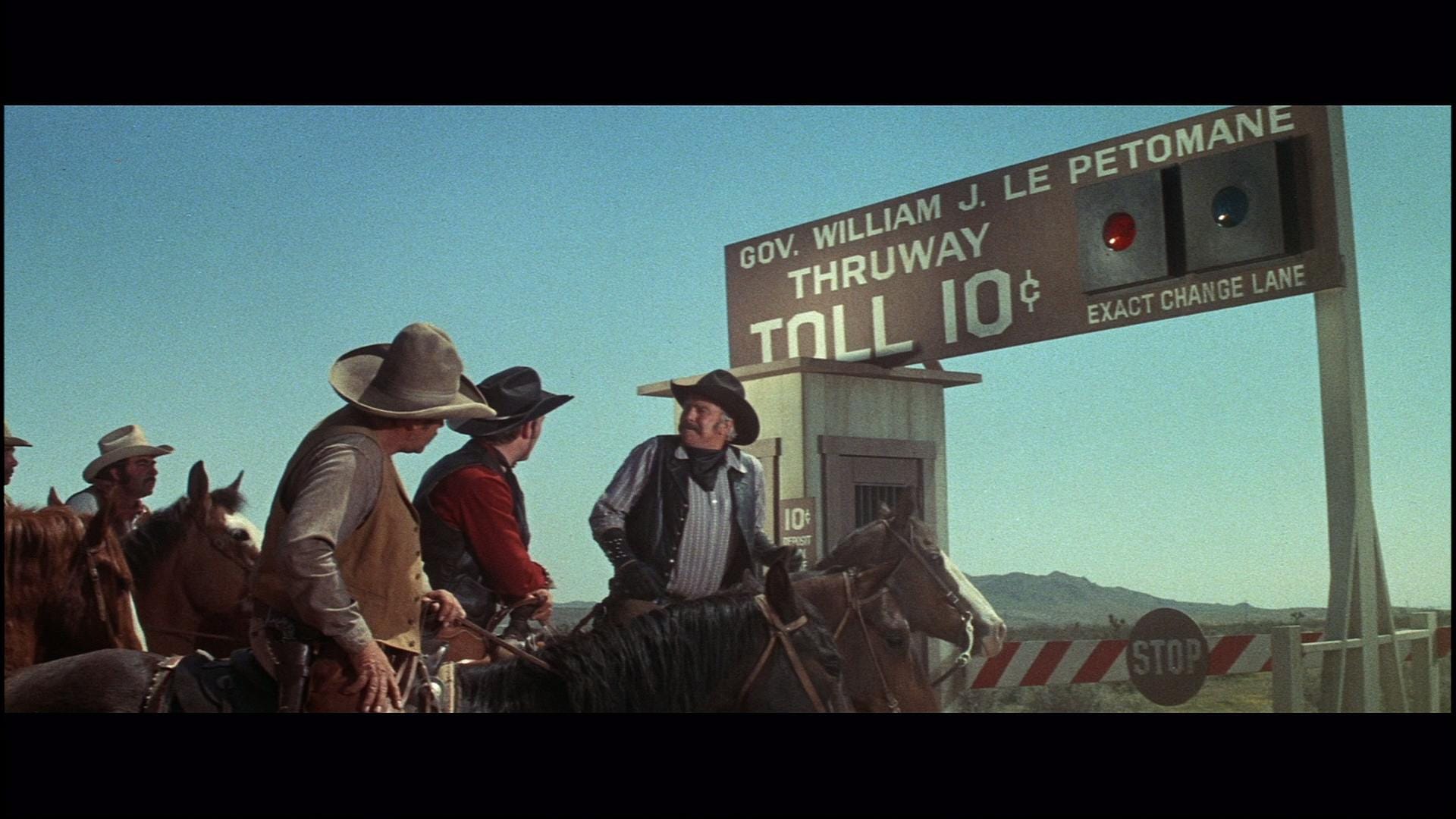
I’ve read many times of the enormous difficulty in building a successful business in many African nations, for no other reason than because every step of a supply chain requires some degree of palm-greasing. Whose palms are getting greased, there? Always people who have enough power to interfere with that chain. In other words, someone with some degree of governmental authority. Doesn’t have to be much. A gatekeeper only has to control one gate to halt a caravan. The Gov. William J. Le Petomane Thruway only charged a dime, but it greatly impeded Hedley LaMarr’s band of rustlers, cut throats, murderers, bounty hunters, desperados, mugs, pugs, thugs, nitwits, halfwits, dimwits, vipers, snipers, con men, Indian agents, Mexican bandits, muggers, buggerers, bushwhackers, hornswogglers, horse thieves, bull dykes, train robbers, bank robbers, ass-kickers, shit-kickers and Methodists.
Corruption, even the low-level variety that sucks out just a bit of blood, like a tick on a large mammal, is a cancer on any nation’s economy, sapping its strength and destroying its potential. Some corruption can be tolerated, but when it becomes systemic, the host has no chance of growing. A single tick is an annoyance. A hundred or a thousand will bring down the mightiest beast.
Now, ask yourself what is the difference between the nickel-and-dime corruption I just described and the tax everything at every stage mentality that we see in places like Europe, where value added taxes (VATs) do just that, and the death-by-a-thousand-fines-and-fees mindset we see more and more in America, where the endlessly hungry big-government types are not content trying to milk the rich even harder than they already do.
Like Don Fanucci, they want to “wet their beak” in every transaction.
Like every mob captain, they expect their tribute.
Like every bookie, they want their “juice,” their “vigorish.” The vig, the percentage of every pot. That’s not just a sales tax, which is imposed on the final transaction. That’s a bite out of every step. That’s why European nations, where VATS tap into the entire production chain, have such lousy economic growth, and why they now have lower living standards than America does.
Now, ponder the message behind this Milton Friedman observation:
If I cannot afford my healthcare, and you cannot afford your healthcare, and John and Susie cannot afford their healthcare, then of course we as a collective cannot afford our collective healthcare plus a bureaucracy to manage it.
What people who insist that things can be made better by taking money out of the private sector so that government bureaucrats can “do good” with it forget is that those bureaucrats have to get paid. That the organizations that administer that “do-goodery” will consume part of what’s taken. Absent the competitive pressures imposed by market forces, efficiency goes out the window. We all know that government is less efficient than private enterprise, simply because it doesn’t have to be.
Another Friedmanism that is plainly true:
Nobody spends somebody else’s money as carefully as he spends his own... If you spend somebody else’s money on somebody else, you care about neither cost nor quality.
That bureaucracy is a zillion ticks sucking blood out of the productive economy. It is no different in result than the people in corrupt nations who require bribes to allow your company to do its business. Every dollar sucked out of the private sector, whether it be from a billionaire or a truck driver, is a dollar that is no longer being used in a productive way.
Our bloated government bureaucracy is the biggest impediment to our nation’s economic growth. Here’s where I give Trump a spoonful of credit - his administration has done some good on the deregulation front, and while the talking heads rarely talk about it, it’s certainly a contributor to the strength the economy has been showing. We need more of that.
We also need to fully embrace the notion I mentioned two paragraphs ago. There is no functional difference between a government that saps productive capital out of the economy via taxes, fees, or fines, and a government that tolerates corruption. In both cases, money that would otherwise be put to productive use is made less useful. Opportunity cost is incurred. Potential wealth is lost.
Economist Frederic Bastiat spoke of “that which is not seen.” This is what he was talking about.
Unfortunately, since we are not taught to see lost opportunity, or to factor “what might have been” into our mental assessments of “is this a good idea,” we are too tolerant of state-sanctioned sapping of productive capital. The government already collects an absurd share of the fruit of our labor. It spends it recklessly, and surrenders a shocking amount of it to waste, fraud, duplication, and inefficiency. We should have sharpened the pitchforks long, long ago, but we’ve been convinced that what they do is important and necessary and that people will be hurt if we make them stop.
People are being hurt by our allowing them to continue.
We need to learn to see that which is not seen.
And we need to wake up to the fact that every tax dollar taken is a dollar lost from the productive economy.
“Monte Carlo” Night? Were there also Impala, Caprice, Chevelle and Nova Nights?
But, seriously - another good column!