
Labor And Wealth


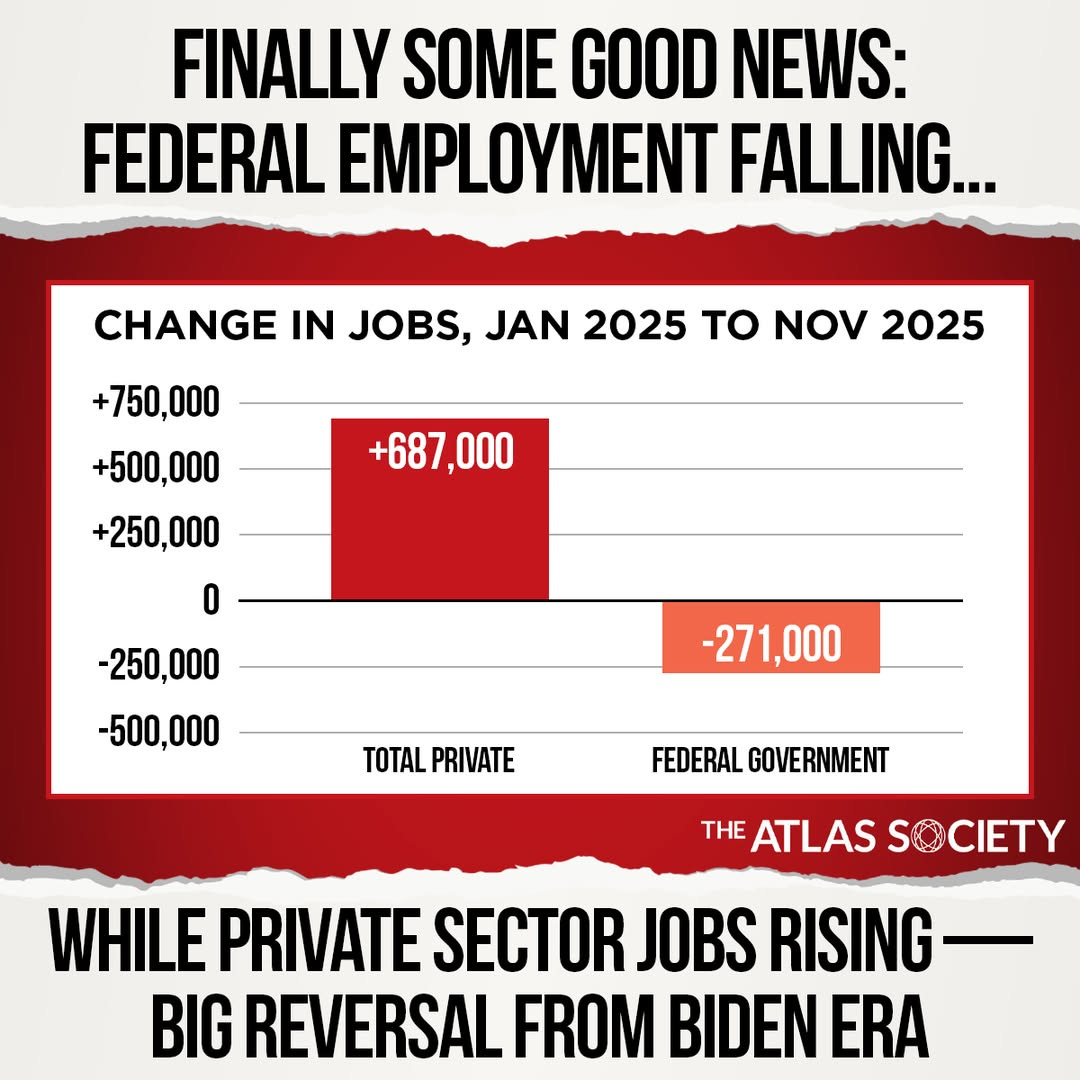
A datum that federal employment has decreased by 270,000 since Trump took office has been making the rounds of late. Any rational American should celebrate this statistic, so naturally some mouth-breathing Internet genius was bound to snarkily denounce it.
WOW 270,000 fewer folks taking in a paycheck, contributing to the economy, and now struggling. What a thing to celebrate.
This illustrates a fundamental misunderstanding of “contributing to the economy.” If the work being done by those 270,000 workers isn’t “productive,” i.e. creating goods or services that people voluntarily and freely elect to purchase, then they are not contributing to the economy. Sure, the wages they collect are spent, but those wages are taken from taxpayers. Since the taxpayers do not get to spend those wages, there is no net positive when the government workers spend them. If the government employees are doing stuff that is less productive than they would in the private sector, the overall economy is actually harmed by their non-participation in the private sector. That’s before we consider the administrative work associated with taking those taxes and managing/supporting those workers, which produces no wealth at all.
Would it make sense to pay 135,000 workers shovels to dig holes and 135,000 workers to fill those holes? Would that contribute to the economy? Would, as Milton Friedman quipped, it make sense to give them spoons instead of shovels so that the government could pay even more people to do unproductive work? Why even have them work at that point?
If the government can perform its basic functions absent those 270K workers, then the nation is better off. Better off that the taxpayer money (or debt) that funded those workers not be spent, and better off that those workers shifted to the private sector, as appears to be the case.
When put in reductio ad absurdum form, it’s clear that government make-work is detrimental to a nation’s economic health. The same principles also make it clear that private-sector make-work is as well.
What’s private-sector make-work? Anything the government does that distorts market-driven outcomes. To illustrate, I’ll name just a couple.
Government regulations that require businesses to devote time to reporting and compliance. A business that needs 10 employees to best serve customers, but has to carry 13 to satisfy government demands, contributes less to the economy. A business that has to pay 10% of its revenue to attorneys, accountants, and other service providers to satisfy government demands contributes less to the economy.
Government regulations that require businesses to incorporate features that consumers may not want. When products are made more expensive by features that not all consumers would opt to pay for, the economy suffers.
Government regulations that require businesses to pay more than what the market would specify. That includes both goods and services. In other words, taxes (including tariffs) and minimum wage mandates that are above market rate.
There are more, but you get the idea.
A certain minimum of government is actually beneficial to economic productivity. A legal system that protects individual and property rights, a court system that adjudicates contracts, national defense that protects the citizenry from aggression, and some more stuff at the local level improve economic output by centralizing services that would otherwise have to be paid for piecemeal. This is why I’m not an anarcho-capitalist - there are a few things that don’t have better private sector solutions. A few, it must be stressed. The vast majority of what our government does today harms rather than helps.
So, count me among those unreservedly pleased at the six-figure decrease in government employment.
I’m not alone. Nor are those who feel the same way all libertarian or conservative absolutists. Nellie Bowles at The Free Press dreams:
… that America’s working class could get the same services while giving less of their paycheck to D.C.
The aforementioned mouth-breather is, unfortunately, not alone in misunderstanding how economies work and grow. He is joined by too many who argue that workers need to be paid “what they’re worth.” This is, of course, code for “more than they are currently getting paid.” It’s a “begging the question” fallacy. They assume that evil greedy employers underpay their workers, and ignore the fact that a worker’s worth is only what the market says it is, not what the worker decides.
No one in his right mind would argue that a talentless writer or painter deserves to be paid per hour of expended effort for grinding out a volume of word salad or daubing watercolors all over a canvas. Their products are only worth what someone will willingly pay for them. The same goes for a business employee. The effort itself is meaningless. What someone is willing to pay for what that effort produces is the deciding factor.
When I write “willing to pay for,” I mean “out of pocket.” With the fruit of his own labor. Not with Other People’s Money, which is the entirety of how government operates.
Excellent post, Peter! 👍 Hopefully, the 271,000 reduction in government employment is just a start! Slice another 500,000 and we could make some real progress. With regard to paying people “what they’re worth”, I suspect the newly unemployed government workers won’t like what the private sector thinks they’re worth. It’s likely a number far less than they were glomming off the taxpayers and will likely require far more effort. Have a great New Year.
Amen. One of your best…and yet, based simply on logic & common sense.