
Lost Purpose


"Rescission." What a beautiful word! Sure, it doesn't sound great when spoken, with a hiss and the potential for a bit of spittle spray, but as political poetry, it's magic in my eyes. It is the UNDO function of government spending. Like so many who bang away at a keyboard all day, I worship at the altar of UNDO.
In case you missed it, the Senate just passed a rescission bill that claws back about $9B in previously legislated spending for USAID ($8B) and the Corporation For Public Broadcasting ($1B). The CPB is one source of funding for National Public Radio, and the cut couldn't happen to a nicer bunch of arrogant-but-clueless ivory tower Bolsheviks.
The howler of the week is NPR's CEO Katherine Maher daring critics to identify a single story that shows bias, and that NPR serves all Americans.
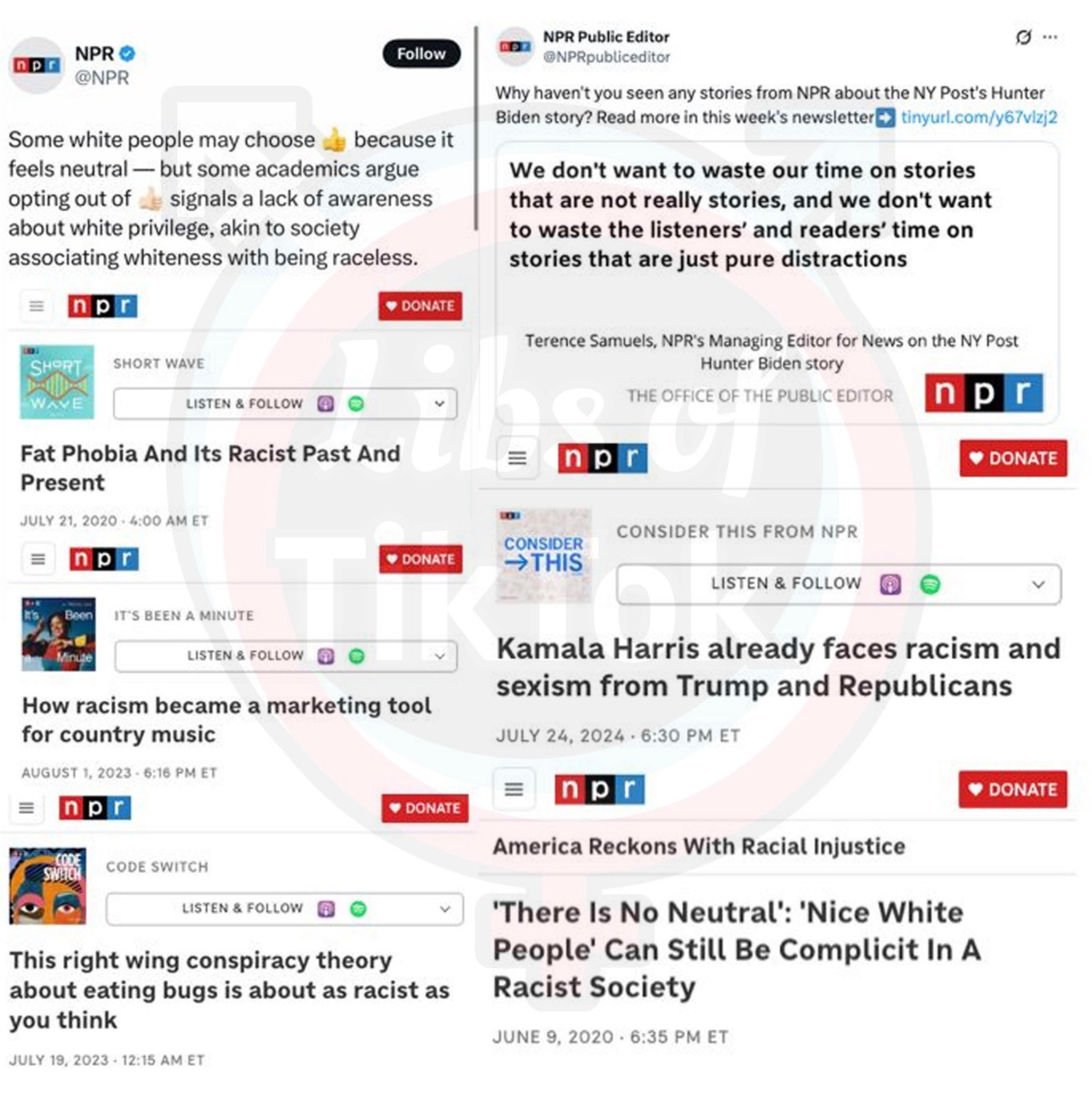
One NPR senior editor noted that NPR's editorial staff has 87 registered Democrats but not a single registered Republican. Maher herself argued that truth itself should be subordinate to “getting things done.”
We all know NPR leans left, and has done so for a very long time. Defenders will claim that what we call bias is simply unvarnished reality, and they might actually believe that. Believing something doesn't make it so, however, no matter how earnest the belief or how noble the intent. Nor does simply declaring one's self in the political center, as some other apologists have by asserting that the Right, not the Left, has drifted into extreme territory.
Were NPR a private entity, it could bias however its bosses felt. Were NPR a private entity, it wouldn’t have to pay lip service to “serving all Americans.” Were NPR a private entity, it would enjoy the blessings of liberty unburdened by the demands of the taxpayers.
It's not, however. It is funded in part by public funds. By force, to be clear. At the point of a gun, which is what any American who doesn't pay taxes may ultimately face. Since it's drawing funding from Americans of all political stripes, it should serve all Americans, not merely those of the Left. There is room for political opinion in such service, but opinion should be acknowledged as opinion, it should not influence overall content, and it should not be one-sided.
A publicly funded news outlet should also not function as an extension of one political party, no matter how much existential dread its people feel at the prospect of the other party gaining power.
I type "existential dread" only half-mockingly. While my social media brings me daily examples of leftists sky-screaming about Republican fascism ("go look in the mirror" is my (usually tacit) reply), in this case the GOP is fulfilling NPR's fears by cutting some of its funding.
I say "good riddance."
Here is NPR's mission statement:
The mission of NPR is to work in partnership with Member Stations to create a more informed public — one challenged and invigorated by a deeper understanding and appreciation of events, ideas and cultures.
My cynic's eye reads "informed" as "inculcated," since bias has so deeply infested itself in the network that politically slanted views are presented without challenge or dissent or even admission of slant. That sort of institutional rot doesn't change.
I found NPR's original mission statement, from 1969, and it says much the same as the new one. It's long, so rather than quote it, I offer a link.
And an amusing excerpt:
Such statements of purpose are only platitudes and good intentions, unless there’s a strong commitment, creative energy, and specific strategy to implement them.
Apparently there was some self-awareness back then, self-awareness that is clearly lacking today based on the CEO's recent statements. The entity is not fulfilling its stated purpose, and I see no hope for correction.
NPR should, like many other government-supported endeavors that fall outside core purpose, be liberated from the yoke of public funding and the strings that come with it. Stand on its own in the marketplace, or fail. With technology advancing as it has, a part of its original raison-d'etre (access for underserved communities) is no longer, or can be fulfilled in other ways.
Those who lament its loss are likely to forget that government money isn't "free," that it comes with obligations to serve all Americans and not just them and theirs. That sense of unjustified entitlement is far too prevalent today, and it needs to be addressed.
Nor is this even remotely a free speech matter. The right of free speech does not come with any requirement that taxpayers fund it, just as the right to keep and bear arms does not mean the government has to pay for my guns.
A final note: Senate Majority Leader John Thune (R-SD), called the $9B this bill saves American taxpayers "a very small amount of money." While as a percentage of federal spending it is, it's an insult to the taxpayers and a signal of how out-of-control our government is to imply that this isn't a big deal.
A quote attributed to Senator Everett McKinley snarks,
a billion here, a billion there, and pretty soon you're talking real money.
The Senator, who died in 1969, appears to have cribbed it from none other than the New York Times, which wrote,
Well, now, about this new budget. It’s a billion here and a billion there, and by and by it begins to mount up into money.
In 1938!
When a billion dollars was the equivalent to $22.7B today, thanks to inflation.
Such large sums should not be normalized as ho-hum and humdrum, and we become complicit in the run-amok spending of our government when we minimize billions of dollars in spending cuts as "small."
It's an important first step for several reasons. First because Congress had lost the muscle memory of how to cut (the mechanics of recission). Second, because it reduces the political trepidation to do more cutting. Third, because "a few billion" sloshing around among leftist NGOs is how Democrats fund their campaigns to take back Congress. And last (and not of least importance) was the absurd nature of the programs cut. More please. Faster.
More great news: https://www.newsmax.com/politics/omb-rescissions-senate/2025/07/17/id/1219102/
Great piece. Imo every single government funded program/project should be under review. None of them should be immune from budget constraints and cuts. Every is on the table, agriculture, welfare, energy, federal agencies, guaranteed loans, absolutely everything needs to be addressed. We are at a tipping point globally with most western countries all issuing debt like candy on Halloween. The US dollar must be protected from more inflationary pressures. The dollar as the world reserve currency is also extremely important, all this spending cannot last if we want to continue to have a high quality of living standards. Seems hopeless, but it really must happen imo.