
No Consequence

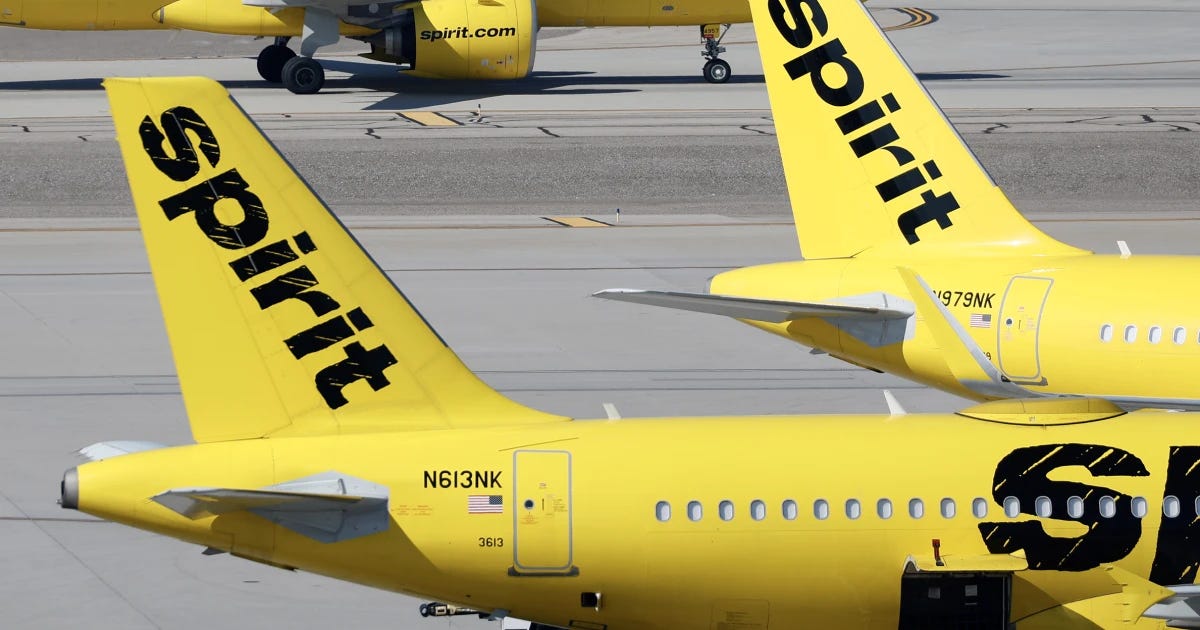
Budget carrier Spirit Airlines went out of business the other day, costing 17,000 people their jobs and stranding an untold number of travelers. The usual suspects “pounced,” blaming the Iran war’s impact on fuel prices.
Many of those “usual suspects” won’t admit their own culpability for that collapse, of course. Their support for politicians that blocked past merger attempts, out of misguided antitrust concerns, and their support for anti-carbon energy policy that stifled domestic petroleum exploration, both contributed to the factors that led to Spirit’s demise.
Now, it may very well be that Spirit’s no-frills, school bus/sardine can, charge-for-every-extra business model wasn’t resilient enough to survive a disruptive event even apart from government’s distortions, but we won’t ever know, will we?
Which is terribly convenient for the interventionists.
And just terrible for the rest of us.
People are conditioned to see only proximate and visible correlations. They often mistake those correlations as cause-and-effect. This is a well-understood fallacy, and it’s often pointed out. What is less-frequently noted is what Frederic Bastiat called “that which is unseen.” The lost opportunity, or opportunity cost, if you prefer. What might have been if Spirit was allowed to merge with one of its suitors. What might have been if domestic petroleum exploration was not hampered by the Biden administration. What might have been if countless other bits of government didn’t make operating an airline more complex and more expensive.
We are perpetually pitched the proposition that government intervention makes things better. In most cases, we find that it only makes things better for a few special interests and strokes the egos of the do-gooder classes who are mostly immune to the negative impacts of the policies they advocate. Everyone else suffers. But since the alternative, the “what might have been,” gets buried by the taste-makers and narrative-writers, few realize the opportunity they have had taken from them. And even when they are harmed more overtly, as with the case of Spirit’s collapse, they have the finger of blame pointed at the wrong culprits.
What’s the remedy? Call them out. I’m not the first to note the culpability of the Spirit finger-pointers. I shouldn’t be the last. Share the message. Inform people what the government’s “helpful” hand is costing them.
Given that we can't repeat history and rerun it altering conditions, correlation may be the best we can do with all its limitations. Considering that Spirit Airlines hadn't been profitable since 2019, it's not surprising that a rise in recent fuel costs of 65% was the straw which broke the camel's back. However, I agree with you that the merger should not have been blocked.