
Process And Outcome

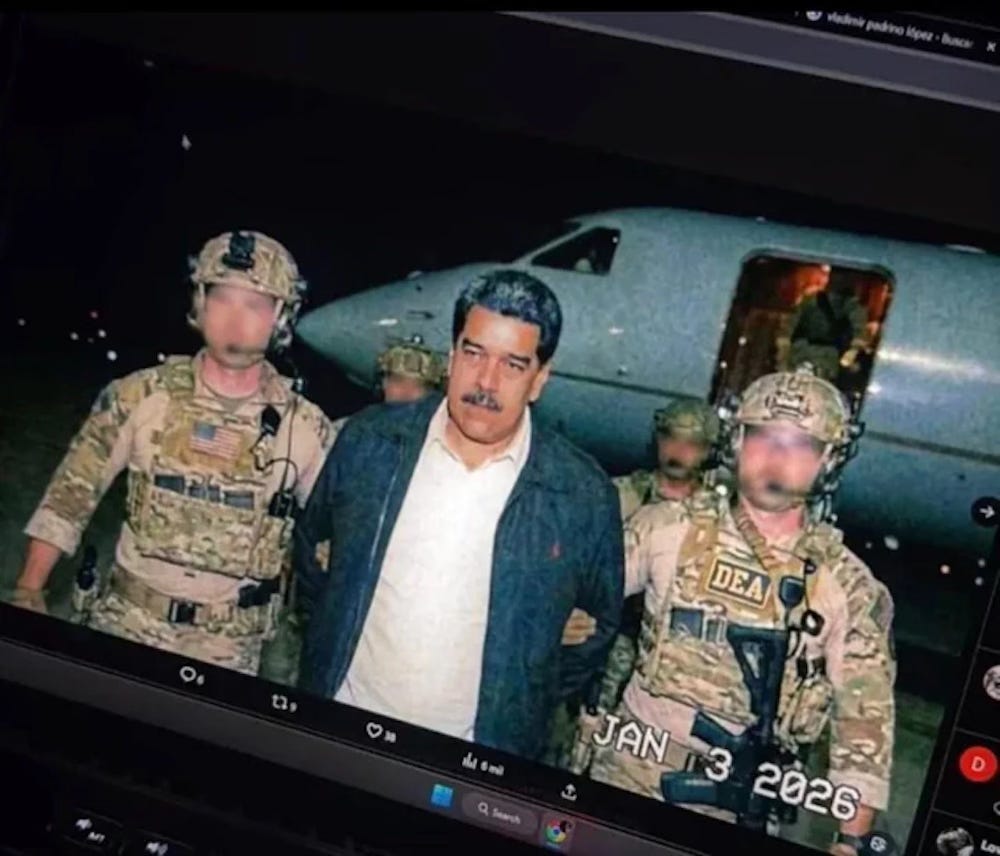
This past weekend, Trump sicced the military on Venezuelan strongman Nicolas Maduro. A successor to Hugo Chavez, who turned Venezuela from one of the wealthiest nations in the world to a crime and poverty-stricken hellhole (thanks to that persistent plague known as socialism), Maduro is widely considered an illegitimate ruler, due to his having rigged the last two elections. How widely? Even the dunderheads handing out Nobel Prizes got it right. They gave the 2025 Peace Prize to Venezuelan opposition leader María Corina Machado, who remains in hiding because Maduro’s goons have been out to murder her.
I shan’t shed a single tear for Maduro, whose regime murdered thousands of protestors, and whose policies continue to impoverish millions in Venezuela (and created a massive refugee crisis) despite it sitting on the largest oil reserves in the world. Hey, American socialists! Pay attention, for once!!
Geopolitically, it’s a master stroke. It’s an affirmation of Trump’s resurrection of the Monroe Doctrine and it reminds other world leaders that the current occupant of the White House has the “f**k around and find out” mindset that is so very American. China, in particular, is likely fuming that a decade and tens of billions of dollars spent propping up Maduro will likely not pay the expected dividends.
It also serves to goad the usual clowns into beclowning themselves once again. I’m particularly tickled by NYCity’s new socialist mayor, who had the audacity to criticize the “regime change” on behalf of “tens of thousands of Venezuelans who call this city home.” I figure most-to-all those expats are dancing in the streets rather than gnashing their teeth. The most upset are our domestic socialists, many-to-most of whom are as Venezuelan as Elizabeth Warren is Cherokee. That partisan politics goads them into offering solidarity to Maduro is another victory for Trump.
That said, Trump’s action is not without fault. The legal justification for the military strikes is thin. Or, if you prefer, contorted. The Constitution calls for Congressional authorization in such matters, but the Administration didn’t even bother asking. I’ve been critical of the sky-screamers wailing about this “imperial Presidency,” given how little they cared about either Obama’s or Biden’s transgressions, but in this case, the epithet fits.
It should absolutely trouble us that Trump is employing a “forgiveness rather than permission” policy.
However, it should not surprise us.
Not because he’s Trump!!.
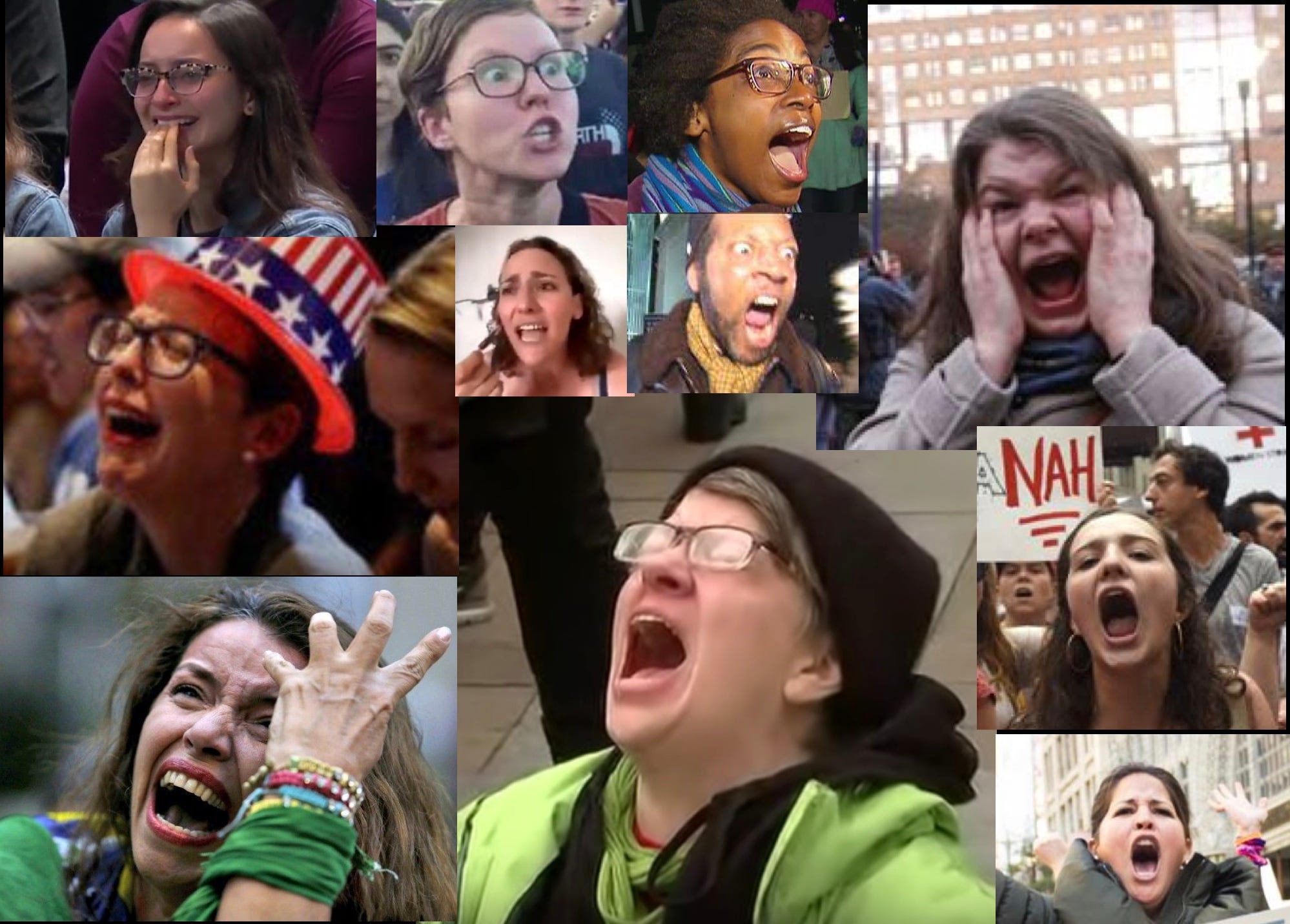
But rather, because he’s the President, and Presidents since George Washington have stretched the limits of their power.
Especially when it comes to military actions abroad.
People have a tendency to overemphasize the present and the recent in comparison to older eras, and the criticism of executive overreach is no exception. While this doesn’t excuse the overreach - I’m not making a whataboutism argument here - it does provide important context.
Consider: Biden’s COVID mandates, student loan forgiveness, eviction moratorium, coercion of social media to suppress speech, and military actions in Yemen, among others.
Consider: Obama’s on-the-fly rewriting of ACA, weaponization of the IRS, DACA actions, Title IX interferences, EPA rules rewriting regarding waterways, cap-and-trade, and carbon dioxide, the Chrysler bailout, and of course his drone strikes in Libya and Syria.
Consider: GWBush’s warrantless surveillance, suspensions of Habeas Corpus (hold that thought), use of torture, and expansive use of military force (the phrase “imperial Presidency” was bandied about quite a bit during his tenure).
Consider: Abraham Lincoln’s suspension of Habeas Corpus, restrictions on free speech, and engaging in war to prevent Southern states seceding.
Most Presidencies (most - we need more Presidents like “Silent Cal” Coolidge) contain actions that range from questionable to gray-area to outright violations of the law.
In particular, military actions have often raised Constitutional concerns. Most of you have at least some awareness of Bay of Pigs (Kennedy), Gulf of Tonkin (LBJ), Grenada (Reagan), Panama (GHWB), Kosovo (Clinton), Libya (Obama), Syria (Trump and Biden), and of course Viet Nam itself, with Truman committing American troops absent Congressional authorization. There are more, including all sorts of CIA shenanigans, including Eisenhower-era covert operations in Iran.
Does any of this excuse Trump’s failure to get Congressional approval, as required by the Constitution?
No*.
But, truly, that’s on us, the voters. We have been tolerating it for decades, and often extolling it when it worked out as we desired - or when done by Presidents we like. Lincoln is widely considered one of our greatest Presidents and the savior of a fracturing nation. Reagan is widely esteemed. Obama was and remains adored by millions.
We also hold certain Presidents who committed similar transgressions and over-reaches in low esteem or even contempt.
Our judgments are not usually based on their over-reaches, but rather on the sum-total and end results of their Presidencies. This is natural, and it is probably also inevitable. There are few saints in the Presidential canon, meaning that criticisms regarding overreach can be fairly applied to most in one way or another.
It’s not how it should be. We see a steady ratcheting upward of executive power, driven in part by our failure to demand stricter adherence to the Constitution, in part by the binary nature of our political system, and in part because we like it when overreaches achieve outcomes we like. This isn’t going to change any time soon, because those among us who’d hold their own team as accountable as they would hold the opposition are few, and that reality drives many of them to “less bad” utilitarianism in their voting patterns.
This is simply how it is.
Nevertheless, our criticism of extraconstitutional actions is important, because it reminds everyone that the Constitution still matters, and every so often we actually get a win in the Supreme Court, our last hope for maintaining limited government. But, until a majority of voters demand a dial-back of government power in general, Presidents will continue to stretch the limits of their power.
Especially when it comes to foreign military action. You can bank on that. It’s a bipartisan love affair.
*I reiterate that there are gray areas and competing legal conclusions regarding Presidents’ power to initiate military action - and that’s before we get into the weeds regarding “police action.”
I write here of the spirit of the Constitution and its distrust of concentrated power. If ours is to be a nation with limited government and separation of powers, we should always start with suspicion re such actions.
As for this particular action? There have already been countless hot takes. Most I’ve seen are standard partisan stuff, which should be discounted or ignored as performative rather than analytical. The real assessments will take place in a decade or two, after we see how it shakes out, after the dust settles, and after Trump goes from elicitor of both elation and wrath to just another name in the history books. Will this be marked as a success or as a mess? Only time will tell, and anyone who, today, confidently predicts one or another is only guessing.
I agree with you that we'll see how this is received in the longer term. But in the immediate future, I think Trump sees the political advantage of cheaper gas prices (gasoline AND natural gas), cutting deeply into the illicit narcotics supply moving into the country, establishing a legitimate government in Venezuela (we can now ship the 1.2 million Venezuelans back to their home) - as all near-term net positives. It also "sends a signal" to China, Russia and Iran regionally that their destabilizing influence won't be tolerated (add to that, the demonstrated proof that their vaunted "impenetrable" air defense systems are a total joke). It also strains Russia's and China's economy. It also pokes a finger in the eye of the "international community" - which for half the country, at least, is long-overdue. It also places the Democrats in the reflexive position of supporting a thug dictator who ignored elections and threatened to kill the current recipient of the Nobel Peace prize. So in the context of all that (and the numerous precedents you already listed), I can't imagine why Trump would have consulted Congress or sought a "resolution" of some kind. This action has all the benefits of pissing off all the right people while delivering what the American electorate "voted for" in 2024. In the long term, we're all dead anyway - as some miserable economist once said.
I think there is adequate justification (and plenty of precedent) for such an action. Mark Levin says the War Powers Act clearly gives the authority. Also, there is a distinction between "make war" and "declare war". Congress can declare war, but that is not an authorization. It's just a declaration. It's nice to have, but it doesn't preclude the president's use of the military. For egregious misuse, congress can impeach.