
Snapshot Identity

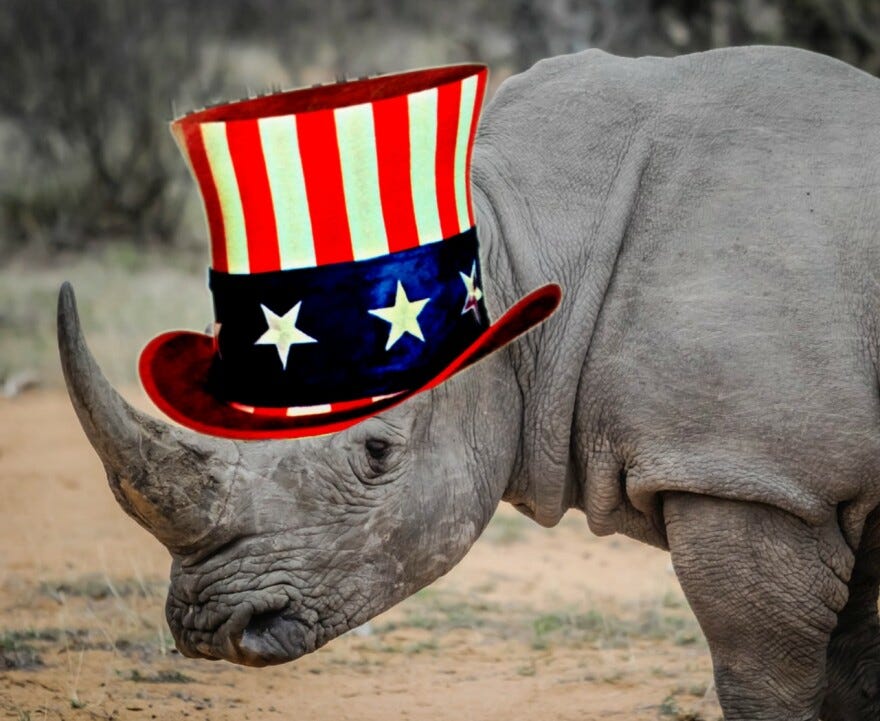
Someone in one of my political groups recently commented that Trump is not a Republican. This got the gears whirring, eliciting recollections of Israel, the rest of the Levant, and who people believe has the most legitimate claim to those lands. Columnist Jonah Goldberg coined the phrase “snapshot geography” to describe that matter and others like it. Snapshot geography is the assertion that a particular moment in history represents the “correct” ownership/dominion of certain parcels of real estate. Someone may assert that the land currently known as Israel should belong to the Jews, because Jews lived there in Year X. Someone else may assert that the land currently know as Israel should belong to the people dubbed Palestinians, because that label was applied to that land in Year Y.
The merits of both land claims can be debated, but the reality of the adage that possession is nine tenths of the law overrules what are in essence appeal-to-authority fallacies. When it comes to national borders, the question of the law mostly goes out the window, because there is no supra-national authority to which everyone has agreed to bend the knee.
This is a world-wide reality, not just one about Israel. Borders and controlling populations have always been fluid, everywhere, with myriad factors constantly at play. That’s why I reject arguments about “legitimate owners” of a land, and that includes the far-Left’s hoo-hah about land acknowledgments here in the US.
It’s also why I reject the declarations of “true Republican,” “Republican in Name Only (RINO), and “not a Republican.” Same goes for “Democrat.” These two terms are political amalgamations, not expressions of ideology or principle. Yes, history reflects persistent themes related to ideology, but there is an awful lot of willful blindness and projection in those who profess to a party label when they assess the realities of “their” party.
The reality is that “Republican” and “Democrat” are whatever the respective parties (politicians + pundits + loyal voters) says they are at a given moment. They are collections of policies and political positions that may or may not match up to previous years’ or generations’ collections. Part of the disparity lies in the fluid nature of reality, human progress, and countless individuals around the world each pursuing their desires. Part of the disparity lies in political calculus - the cobbling together of whatever offers the best chance at electoral victory in a given moment.
Part of the disparity lies in people seeking to claim ownership of a label so that they can exert greater influence over others who also align themselves with that label.
“This is my club, these are my rules, and if you want in, you need to follow them.”
To justifying such an assertion, to set one’s self above others in the same room who have different ideas, people will often point to moments in history where the label more closely aligned with their desires. This we can call “snapshot identity.” Thus, one might assert that the Reagan era was when we had “true” Republicanism. Or, one might assert that FDR’s tenure was most properly Democratic.
It’s, of course, no surprise that people choose periods they consider successful and popular as part of their assertion.
It’s also a deflection. It’s playing to people’s tribalism rather than trying to win them over via logic and reason. It’s a claim that Policy X is better because it is associated with “proper” Republicanism, rather than defending Policy X on its merits.
This is natural in politics, because people are tribal creatures. But, it does not necessarily advance the best policies for the present day. It might, out of coincidence or similarity, but those policies would be far less assailable if they were presented with justification rather than “this is what real Republicans should believe.”
Tribal loyalty is a natural instinct. Tribal loyalty is counted on by political calculators. But, decades of tribal loyalty have not improved the nation’s governance, or ensured that the best policies are the ones being pursued.
Don’t play the snapshot identity game. It’s not going to win you converts. Indeed, it’s most apt to alienate those who don’t already agree with you, and that’s no way to advance your desired agenda. Instead of labels and tribalism, talk about issues. Then talk about who you think is more apt to act on those issues in the ways you prefer.
This is where "party" becomes a trap. I've written before about my attendance at party conventions and the disparate views espoused by attendees. The fact is, a "party" is beneficial for a short time, when a single issue or maybe two unite a group of people for political purpose. However, when party remains longer, and grows beyond such simplicity, it becomes a self-perpetuating power proxy that does not generally represent those who cling to the party's label. The old saying, "you can please some of the people some of the time, but you can't please all the people all the time," comes into play here. A party cannot, by nature, represent everyone who claims to be a member, unless that party is limited to one or two political points, Beyond that, adherents will disagree.
As you rightly note, tribalism then comes into play. This is what Washington foresaw and foretold in his farewell address. When party becomes the focus, you end up with two major parties (as we have) between whom power goes back and forth. Inevitably, those enamored with power climb to the top and use the "party" for their own purposes, regardless of alleged policy positions. Party just becomes a hammer with which to bludgeon others into voting for you (or, in reality, against "them" - the "other" party). Most people have been so hammered into this tribal political pandering that to vote for someone other than the party candidate, no matter how bad or how much you disagree with policy, will result in ostracism and claims that, "you're throwing away your vote," or "you're voting for the 'other' party."
It is a sad state, and the country would be far better were we to do away with parties and let candidates run on their own platforms and merits. But tribalism is easier - it requires little thought, much less involvement.
That's also why the founders didn't seek to eliminate parties - they knew it was human nature (as you again pointed out). They sought to try to mitigate the negative effects of party. But in this they failed, and that was obvious even as soon as the early 1800s.
Reminds me of “flashcard thinking” I had to deal with recently. Management sure greater foot print makes a more expensive building. But if you wind up with a lot of structural steel holding up equipment that would have bolted to grade level concrete? And the building is more than double height in a grade 5 hurricane zone? And the operators have to go up 30’ of stairs to check on heart of process?
Yeah, you have less sq ft but you didn’t save any money and you’ve made it worse operationally.