
Straw-Manning Safety

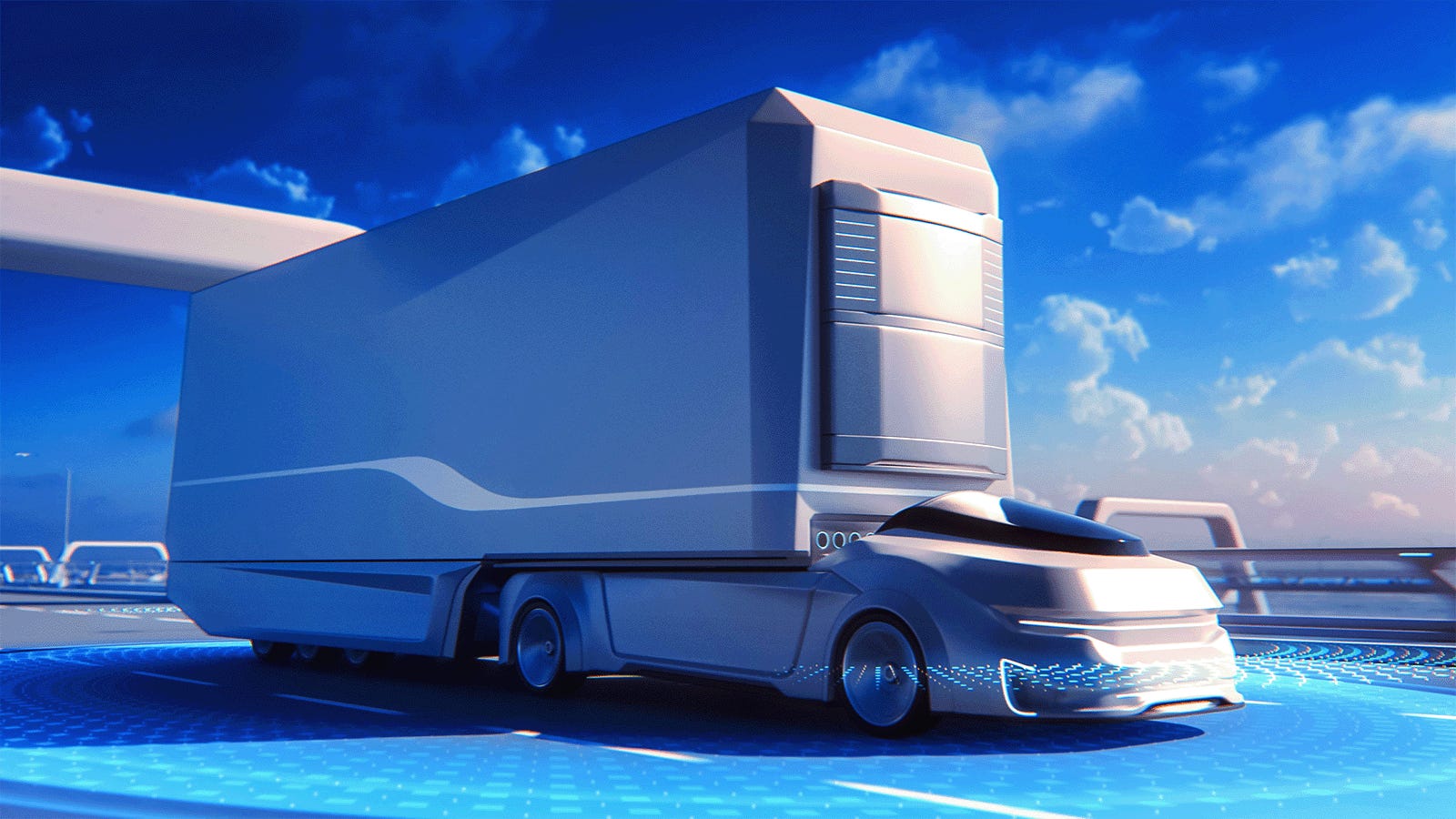
A few days ago, International Motors announced trials of self-driving trucks. A couple days after that, Senator Josh Hawley (R-MO) announced that he plans to introduce legislation to ban autonomous automobiles. He then pulled a nifty little stunt. He combined assertions that they are "not safe" (more on that in a moment) and claims that they are "terrible for working people" and "If AVs become the norm, the Teamsters won’t exist anymore."
So, even if the safety question is addressed (it eventually will be), we can't have them because some jobs might be rendered obsolete? Would the Senator have banned farming machinery back at the beginning of the Industrial Revolution because those machines would replace field laborers? Is he on board with the stevedore and dock worker unions who demand that autonomous shipping container loading technology be banned from American ports? Should buggy whip makers and ice deliverers have been protected from obsolescence?
Proving yet again that political parties have no ideological foundations, Hawley is pushing protectionism from within the ranks of the supposedly free-market Republican Party. This is all part of the electoral pivot precipitated by Team Blue's shift from the working classes to the college crowd. The blue collar vote shifted to Team Red as a result of that shift, and so now we witness both parties standing in the way of progress and economic growth.
And, thus, in the way of benefits to the American public. Self-driving trucks would not only reduce transportation costs and in doing so put money back in people's wallets via cheaper goods, they would address a forecasted shortage of drivers.
Not that politicians care about the body politic as a whole. No, their calculus is almost always about what benefits can be delivered to voting blocs that are of significant size and that might be inclined to vote their way. This is why elites and talking heads are obsessed with lumping people into identity groups, and then demanding that members of those groups vote as the group is expected to. This is why smaller identity groups that don't really have common roots or common cause are aggregated into large bundles like AAPI (Asian American and Pacific Islander) and LGBTQIA2S+. What commonality, other than global hemispheric geography, do Mongols and Maoris share? Why are trans persons (gender self-identification) combined with gays and lesbians (sexual orientation)? The latter is starting to break down as the trans activists try to eradicate sexual orientation with terms like "genital preference," by the way. Even the label "Christian" is an amalgam, and didn't see use in the political arena until the middle of last century. Mainstream Protestants, Catholics, Evangelicals, Mormons, and others are supposed to be one voting bloc, no matter their fundamental doctrinaire differences... and long history of antipathy and worse?
But I digress. The point is that the party of supposed economic growth and progress is behaving a lot like the party of protectionism and economic calcification.
Over in Europe, where protectionism and regulatory strangulation are the norm, the fruits of the stagnation those norms have wrought for decades are now obvious. Meager attempts to liberate the French economy from these growth killers recently led to the toppling of Macron's government. Once the gravy train is rolling, it's mighty hard to slow.
But, progress will always win out. Market forces can be delayed, but never halted. Like blockages in a stream flowing downhill, they might create dam-ups, diversions, and turbulence, but the water will eventually win out. The question is - embrace the growth and the inevitable reality of creative destruction, or do broad harm by trying to offer selective, narrow, and temporary benefit?
Self-driving trucks are an evolution. As an evolution, they won't appear all at once, but will slowly work their way into the economy. Government can just stay out of the way, barring some basic requirements regarding safety on public roads, or it can try to slow the inevitable with feel-good but futile (and damaging) laws.
Thing is, when you try to dam up a stream, when the dam breaks, a deluge follows. Halt the automation of trucks for a while, and when the breakout happens, a lot more drivers will be displaced than if market forces diverted potential new drivers to other careers as the automation grew organically.
Natural attrition is the best way for workforces to shift as technology advances and market dynamics do their thing. Unfortunately, do-gooders think they can do better than allowing things to happen organically, so they intervene out of some sense of empathy for the displaced. Since they rarely have the actual power in such matters, they provide inadvertent cover for the more selfish, who seek not to create soft landings, but instead look to milk the matter - and line their pockets - for as long as possible. Union bosses aren't apt to say "we will participate in a planned and organized down-sizing." Instead, they fight tooth-and-nail, and get politicians to write laws that benefit them while harming the rest of us. The road to economic stagnation is paved with good intentions.
As for the safety of autonomous vehicles? Today, about 40,000 are killed in vehicular mishaps in the US every year. Let's suppose that self-driving cars and trucks reduce that number by one half. Or, better yet, by 90%, as some expect will be the threshold that will convince politicians to allow them to operate. 36,000 lives saved still means 4000 dead, and if a loved one is one of those 4000, you are not apt to care much about the 36,000 that lived. But, from a policy perspective, the aggregate is what should matter, and we should not let anecdotes derail positive progress. We should not let the very good be the enemy of the perfect. Most of all, we should not let fear-mongering be used as cover for vote-buying, influence-peddling, and progress-halting.
Automated (self-driving) line haul freight will almost certainly become the norm, unless we shut down the market economy. It makes too much economic sense, and the technology is practically here already. As to personal vehicles, I wish that anyone who learned to drive in an urban environment (offensive, aggressive vs. defensive driving) be highly incentivized to own and use self-driving cars.
I think that you are far too optimistic regarding self-driving trucks and cars. It's too bad because they would be a great boon. What I fear is that in order to make self-driving vehicles possible will require the elimination of humans in driving. We are far too difficult to account for by algorithms and would be the equivalent of a joker in the deck. I could see government taking over and controlling how we use cars and trucks to "protect" us and of course the control by computers opens the door to hackers. We might look upon the days of 40K deaths/year as the good old days.