
Tariffs and Inflation

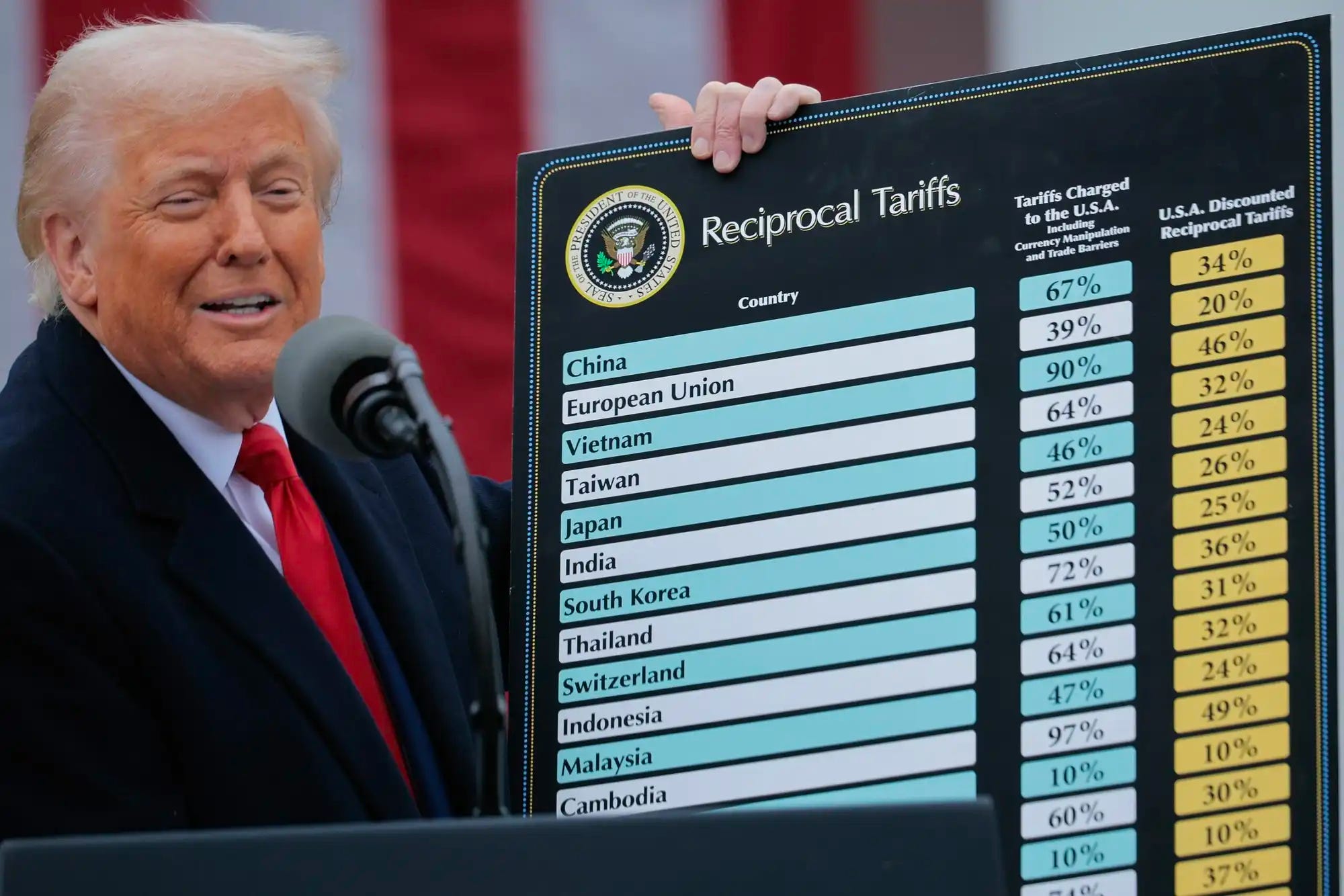
Ah, tariffs. Probably the most polarizing Trump issue of all. At least on the Right - the Left hates all things Trump, individual merits aside, and it's not much of an exaggeration to conclude that they would reject a cure for cancer should it emerge from his administration (you may recall that some Team Blue NeverTrumpers refused the "Trump Vaccine" during the pandemic - and embraced it as soon as Biden got elected).
Trump's loyalists defend tariffs with a variety of justifications - not all of which can be true at the same time. The Never-Trump Right decries them as the worst thing since the Russian Revolution. The rest of us range from the optimistic to the skeptical. Number me among the last, for reasons I've detailed many times on this blog.
Today, however, isn't about the tariffs themselves. It's about the claim that tariffs are inflationary, and that the latest Producer Price Index, which came in well above expectations (0.9% vs 0.2%) is proof.
Now, I'm not an economist, nor do I play one on television. I do have an MBA, which included several economics courses, and I have learned a thing or two since then. So, take my commentary as just that, commentary, and do digest a range of it before forming your own opinions. So, with caveats in place…
Tariffs are a tax, in that the government takes a piece of the final dollar amount paid for the goods being tariffed. Whether it takes it early in the manufacturing and distribution chain or later doesn't matter. Even if the manufacturer absorbs the entirety of the tariff by not raising the consumer's final price, the money is still taken from what the consumer paid. That money is taken out of the productive (i.e. private) sector and put into the unproductive (i.e. public) sector, which means that, like any other tax, it depresses economic activity and growth. Passing the tariff on to the consumer, which is almost always going to happen in the long run because Trump's tariff rates are almost always far greater than the profit margins of the products being tariffed, does the same thing. It takes productive money and makes it unproductive.
So, no matter how you look at it, tariffs are a drag on the economy. Apologists argue that they are a drag on other economies, but you can't split things out like that, and the global economy is not zero-sum. Products themselves, not economies, are what's being taxed, and tariffs hit both the originating and receiving economies.
Are they inflationary?
It depends on how one defines inflation. Here I am of the Milton Friedman school, which tells us that inflation is always about the money supply. The inflation of the Biden years was the result of massive deficit spending and correlated borrowing/printing of money, and inflation we see today is also the result of excessive deficit spending and resultant money supply growth.
Some think more broadly, as in "if prices go up, that's inflation, and since tariffs make things more expensive, tariffs are inflationary."
Well, not quite. Thing is, if you remove a tariff, the price increase will revert in fairly short order. Does that count as deflation? Or is that simply a variability, like agricultural prices after a drought or lumber prices after a hurricane?
The other side of this coin is attribution. Some are inclined to presume that any inflation we see is the result of tariffs, while their counterparts are quick to assign any economic growth we see to the tariffs "working as intended," and thus refute my assertion that they are an economic drag.
The problem with both of these is that tariffs are just one of many variables. Crediting or blaming them for certain metrics without considering all those other variables is indefensible, and oftentimes dishonest.
What are those other variables?
On the positive side, there's deregulation, sane energy policy, an administration less hostile to business, the making permanent of the expiring Trump tax cuts (and some new ones), to name a few. There's also relief from the expected (broadly bad) policies of a Harris administration - businesses do look ahead in making their plans, after all.
On the negative side, there's continued heavy spending, the tariffs themselves, and the mercantilist approach to global trade. As is usually the case, all these benefit a favored few at greater expense to the whole.
I am an inflation hawk, and believe that the real target rate should be zero, not the Fed's 2%. Every point of inflation is a point stolen from the fruit of Americans' labor, and inflation is one of the most evil things that government creates. But, I'm not ready to point at tariffs as the proximate cause of current inflation, even as I point at them as drags on the economy and repeatedly decry them as among the worst things Trump is doing. It may seem a rather small distinction, but I think it's an important one.
A footnote: Many question why, if tariffs are a Bad Thing, so many nations impose them. The answer is simple if you understand motivations. Tariffs provide targeted benefit to domestic producers in competition with foreign exporters. Thus, they can be used to reward favored constituencies, or well-connected insiders, or political donors. Politicians may claim to be about their nations, but most of them are about getting re-elected, and political pelf is vital to that pursuit. That they cost their nation en toto more than the benefit provided to the favored doesn’t matter, because the cost is more widely distributed - and can be explained away to under-informed voters who fall for the siren song of protectionism.