
The Current Thing


History reveals, pretty clearly, that the populace (and the media) has trouble multitasking or parallel processing. That we have attention for only one major story at a time.
Someone came up with the phrase “The Current Thing” to describe that phenomenon.
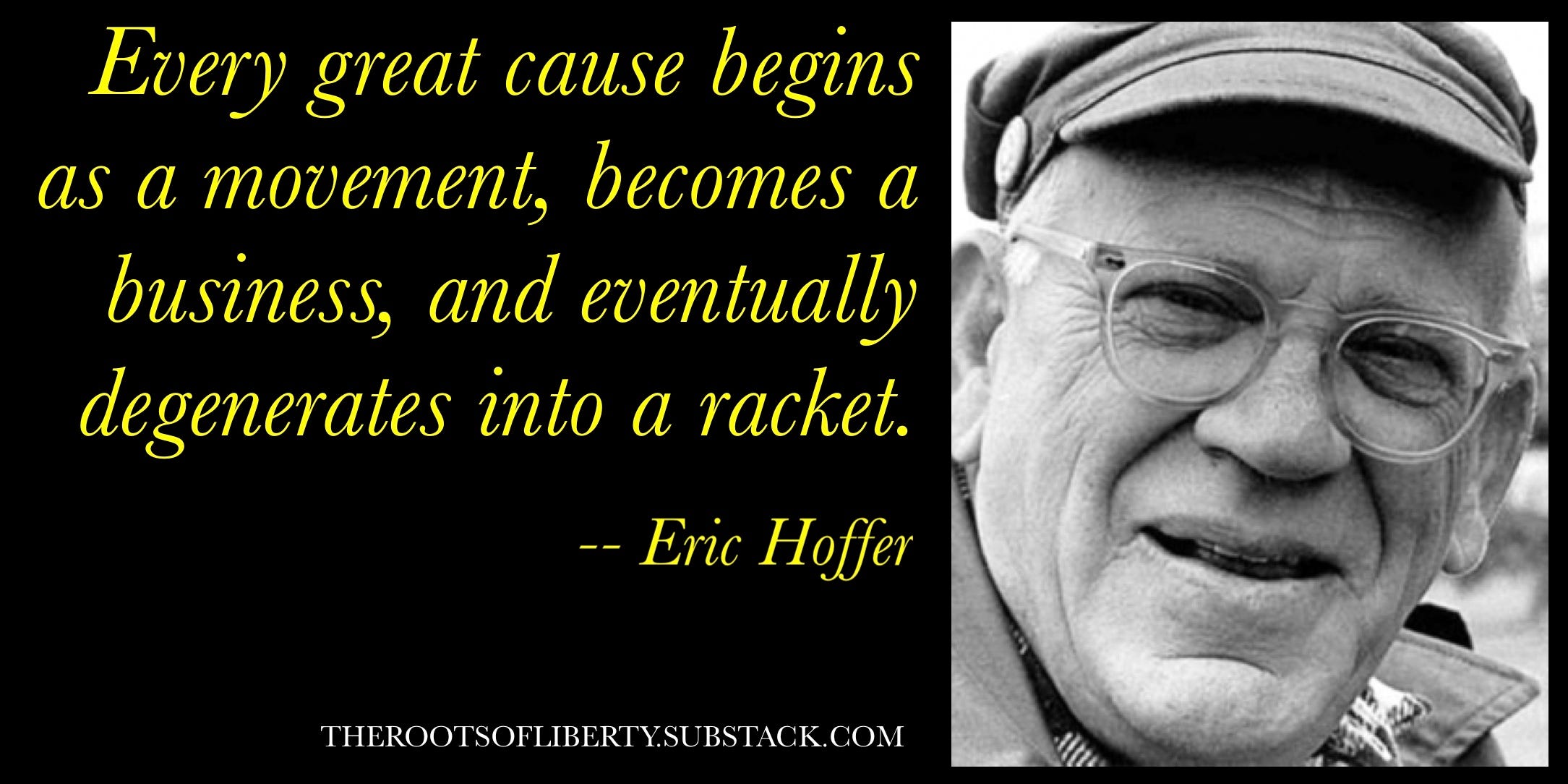
The Internet has accelerated the turnover rate of The Current Thing, but some Current Things persist long enough to at least begin to go down the pathway that Eric Hoffer aphorized.
Politicians either love or hate The Current Thing, depending on whether it helps or hurts their team. When it’s the latter, we get wag-the-dog efforts to create a new Current Thing. Sometimes, wagging the dog works. Sometimes, people see through it, but even when they do, they forget rather quickly.
Because a new Current Thing catches their eye, and their brains reset to baseline. It’s analogous to the Gell-Mann Amnesia effect, which points out how people go back to trusting the press even after they’ve witnessed a story being gotten spectacularly wrong.
People usually love the Current Thing, because it gives them a chance to declare their opinions to the world, and in doing so to reinforce their political leanings. Whether lauding or disparaging The Current Thing, like-minded people will either click or voice support.
The Current Thing can make strange bedfellows. It can make interventionists out of free-marketeers. It can make Second Amendment advocates out of life-long gun-grabbers.
It can also make hypocrites (or cherry-pickers, if you want to be more generous) out of just about anyone. A previous Current Thing, Israel’s response to the 10/7 massacre, revealed millions of anti-genociders among us, almost none of whom voiced a peep, before or after, about the real genocides in Sudan, Myanmar, the DRC, and Syria. Now that that Current Thing has passed, we see many of those anti-genociders going mute about the thousands to tens-of-thousands of protesters killed by the Iranian theocratic regime.
Or, worse, voicing support for that regime. Often because the other team is denouncing the regime, and tribal loyalty often overrides basic humanity.
Indeed, we can safely conclude that many, possibly most, people who render black-and-white opinions about The Current Thing are repeating what their team told them they should say.
What happens when The Current Thing changes?
Most people move on, happy to get a fresh chance to proclaim, argue, and lord over those who have differing opinions. The ones more deeply invested in the now-former Current Thing may not want to let it go. Some continue to preach. Usually to diminishing audiences, and to growing indifference. Which often impels them to get louder. Especially if they’ve monetized or leveraged that now-former Current Thing. Every great cause eventually degenerates into a racket.
Does that mean that Current Things aren’t real? Not at all. The racket did start out as a cause.
What we must do, if we are to avoid falling prey to Current-Thing fads, is be eternally vigilant. Think for ourselves, be cautious about embracing narratives offered by others, avoid letting tribalism slant our conclusions, and above all be on the lookout for signs that causes and movements are degenerating into businesses and rackets. And do something that I got scolded for recently: Take your time. Process on your own schedule, opine on your own schedule, and reject others’ demands that you affirm whatever they come up with. If, in due course, you find yourself agreeing? Embrace the greater discipline of the slow, of the more grounded and better founded conclusion. I say it all the time - there’s no prize for being first.
I’ll close with a re-run of a 2019 bit.
Get it Right?... Or Win The Fight?
An article over at Forbes attempts to answer the question “why don’t greens and progressives embrace nuclear power as a solution to global warming?” Some who actually think about things do, but they are few, and they are typically ignored. The article suggests the conventional wisdom, with which I concurred, is that much of the resistance is simple ignorance and a culture of “nuclear” being a bogeyman. It then challenges that wisdom, positing that the reason may have more to do with an “appeal to nature” fallacy, that there’s some sort of idealism or romanticism in the concept of wind and solar power, and that’s enough to make people choose willful blindness to the many negative realities. And, enough to make them dismiss nuclear, even though, from a green’s perspective, it’s the perfect energy source. The author then goes on to discuss how the Green New Deal is a proxy for every progressive fantasy in history, but let’s leave that for another day.
I find the “natural” assertion compelling, but incomplete. I think there’s an additional factor at play, in that people would rather “be right” than “get it right.” People prefer their initial ideas win and their first plans be implemented than “compromise” on an alternative that achieves the same ends, especially when that compromise challenges long-held but flawed or incorrect beliefs and views, and especially when that compromise gives their ideological foes something that they’ve been advocating.
In other words, many want the victory more than the result. As Arnold-as-Conan observed, they want:
To crush your enemies, to see them driven before you, and to hear the lamentations of their women.
This is the state of politics today. I’ve often commented on these pages that neither “side” in the current political scrum wants to grant an inch, lest it be trumpeted by the other side as a victory. This stands in the way of real, positive change, and not just in energy/climate policy. We see it in the immigration debate, where it was so important not to give Trump his stupid wall that an opportunity to leverage massive gains was abandoned. We see it in the “reproductive rights” debate, where the obvious alternative to forcing religious objectors to pay for birth control: making The Pill over-the-counter without a prescription, isn’t being seriously considered.
Then, there are the issues where the two sides’ positions stand in opposition. Abortion is one. Health insurance is another. Marijuana. And yet, there are “compromise” positions available on all of these and more. Positions that aren’t palatable to either side, but would be an improvement over the status quo.
Yet, the only place we find political progress is in matters that are mostly “consensus” to begin with, such as criminal justice reform, opioids (I think that consensus is wrong, but it was nevertheless a consensus).
In my research for this article, I came across a report that “enacted bills with bipartisan support” are at a 20 year high. The article, however, defines “bipartisan” as having at least one Democrat and one Republican co-sponsor, which is a far cry from asserting that these bills passed with strong support from both parties. Given the hard-tribal loyalty demands placed on politicians by the parties and their activists, even one “defection” may be enough to warrant note, but most political observers know what I’m talking about here: victory is more important than success.
So, half the partisans cheer and half sky-scream every time some political battle concludes, but nothing gets fixed.
Our broken political system is a direct product of our broken priorities. When we stop hating each other so much that we’d rather leave things broken, just to ensure the other side doesn’t get a bread crumb, then maybe we’ll see politicians acting as they should.
When "winning" and "owning" the other side is all that's important then of course little gets done.
I like to think we've evolved a long way past the herd instinct, but the truth is many among us need the herd to "tell them what to think". It turns out that herds have leaders - usually self-selected, but no more rational or competent to decide for the rest of us, but possessing utter certainty in their wisdom and righteousness. Which is part of the psychological "trick" after all.